National Mental Health Awareness Month: More Good Days, Together
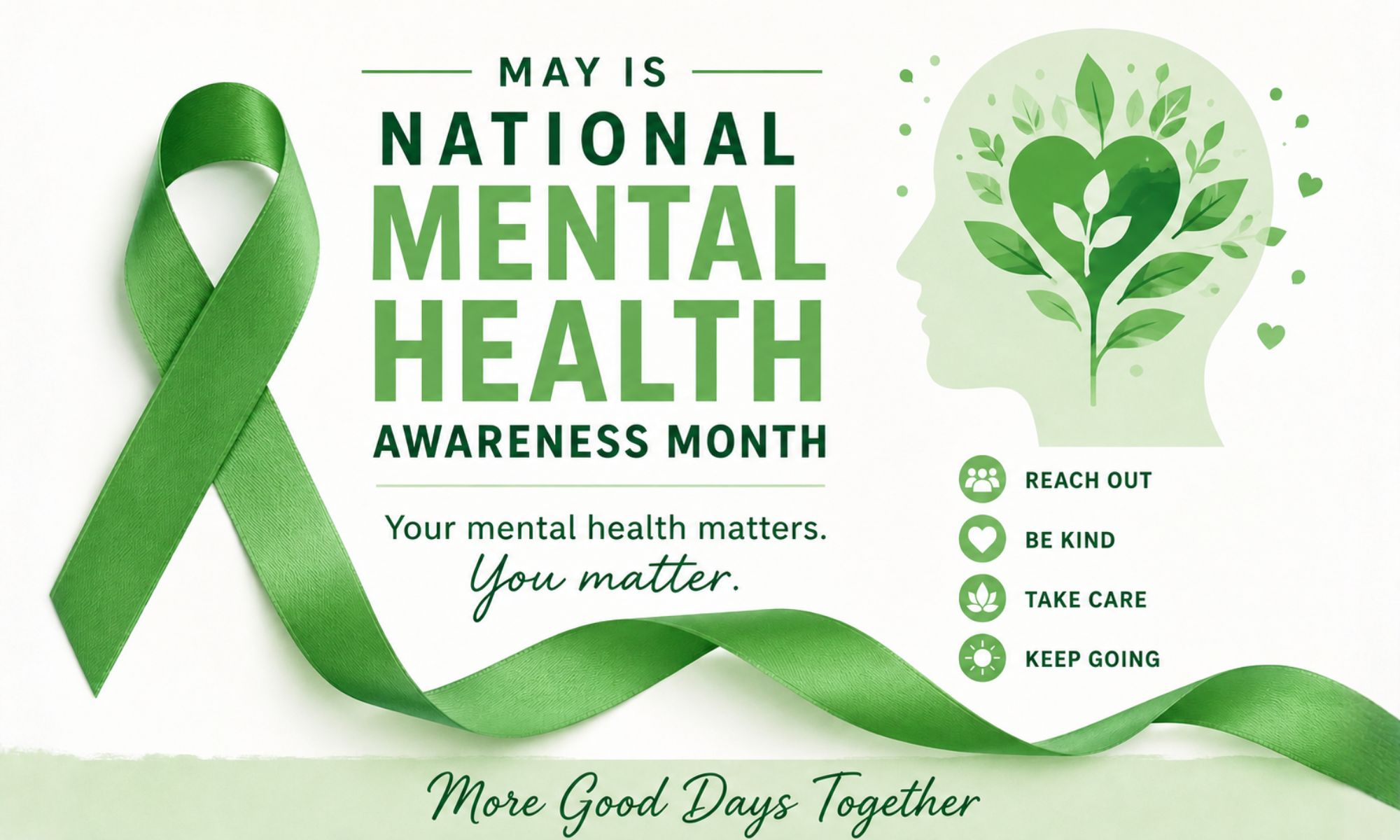
As National Mental Health Awareness Month draws to a close this May, Mental Health America’s 2026 theme—“More Good Days, Together”—shifts the focus from individual struggle to shared support. This year’s campaign emphasizes the power of community, flexible approaches to wellness, and everyday empathy so more people can experience days that feel manageable, meaningful, and genuinely supported.
Memorial Day, Veterans, and Community Support
National Mental Health Awareness Month concludes alongside Memorial Day, when the nation honors service members who gave their lives in defense of the country. It is also a critical moment to recognize the ongoing mental health needs of veterans who transition into civilian life and the workforce while carrying invisible wounds such as PTSD, depression, anxiety, and moral injury.
“More Good Days, Together” speaks directly to the importance of community for veterans: peer networks, family, co-workers, and employers all play a role in reducing isolation and stigma. When organizations create veteran-focused resources—peer support groups, trauma-informed counseling options, and flexible scheduling around VA appointments—they not only honor service but help veterans build more stable, hopeful days backed by a supportive community.
Stress Across Every Level of Work
The idea of having “more good days” resonates because stress and mental health challenges show up at every level of the workforce—front-line workers, mid-level managers, executives, and founders.
- Front-line and hourly workers often navigate unpredictable schedules, financial strain, and difficult customer interactions, which can erode both mental and physical well-being.
- Knowledge workers and mid-level managers face constant connectivity, performance pressure, and blurred work–life boundaries that drive burnout.
- Senior leaders and entrepreneurs carry responsibility for payroll, strategic pivots, and investor expectations, often in a context that discourages vulnerability or open discussion about mental health.
Across this spectrum, chronic stress can evolve into anxiety, depression, substance misuse, and other mental health conditions if not addressed early and consistently. The “More Good Days, Together” framework pushes organizations to build cultures where people can speak honestly about stress, access flexible support, and work in ways that are sustainable—not just productive on paper.
Innovation Powering More Good Days
As awareness grows, a group of emerging mental health innovators is building tools, therapies, and platforms that can help individuals, families, and workplaces create more good days—especially for those living with depression, anxiety, and other brain health conditions. While these companies operate mainly in clinical and therapeutic settings, their solutions ripple into everyday life and work by expanding access to effective, evidence-based care.
Seven Companies at the Frontlines of Mental Health Innovation
As markets and workplaces respond to growing mental health awareness, a group of emerging innovators is building next-generation tools, therapies, and platforms aimed at transforming how we understand and treat brain health. While these companies operate primarily in clinical and therapeutic domains, their work directly supports the broader workplace mental health agenda by expanding access to effective care.
Cybin Inc. (HELP) Psychedelic-derived therapeutics. Developing deuterated psilocybin and DMT analogs targeting major depressive and anxiety disorders, potentially offering new options for treatment-resistant employees who do not respond to traditional antidepressants.
GH Research PLC. (GHRS) 5-MeO-DMT–based therapies. Advancing 5-MeO-DMT candidates for treatment-resistant depression, which could reduce the burden of severe, persistent mood disorders that impact presenteeism, absenteeism, and disability in workplace populations.
Atai Beckley N.V. (ATAI) Mental health biopharma platform. Building a diversified pipeline of psychedelic and non-psychedelic compounds for depression, anxiety, and other CNS conditions, aiming to expand the toolkit clinicians use to support working-age adults.
Defirium (Mind Medicine) (DFTX) Novel, brain-focused therapies. Designing psychedelic-inspired and other innovative treatments for anxiety, depression, and neurodevelopmental conditions, with potential to improve functioning and quality of life across the workforce.
BrainsWay Ltd. (BWAY) Deep TMS medical devices. Providing deep transcranial magnetic stimulation systems for depression, OCD, and other neuropsychiatric disorders, giving employers and health systems non-pharmacologic options that can be integrated into outpatient and employee-assistance pathways.
Neuronetics, Inc. (STIM) TMS systems for depression. Maker of NeuroStar Advanced Therapy, the leading transcranial magnetic stimulation system for major depressive disorder, with FDA clearances spanning adult MDD, OCD, anxious depression, and adolescent depression. Through its Greenbrook treatment-center network, Neuronetics also delivers non-pharmacologic, in-office care that can extend treatment-resistant depression options for working-age adults.
Talkspace, Inc. (TALK) Virtual behavioral health platform. Delivering online therapy and psychiatric care via text, audio, and video, including enterprise solutions that enable employers to offer frictionless, confidential access to mental health support for remote and on-site staff.
Together, these companies demonstrate how next-generation pharmacology, device-based neuromodulation, and virtual care can underpin a more responsive, accessible mental health ecosystem. By expanding both in-person and digital pathways to care, they help individuals and communities build routines and support structures where more days feel grounded, connected, and livable.
What “More Good Days, Together” Means for Employers and Investors
For employers, embracing “More Good Days, Together” means going beyond awareness months and posters to redesigning the everyday experience of work. That includes flexible approaches to wellness, training managers to notice early signs of distress, normalizing conversations about mental health, and baking wellbeing into policies, benefits, and leadership expectations. It also entails intentional support for groups at higher risk, including veterans, first responders, caregivers, and workers in high-volatility or trauma-exposed roles.
For investors and market watchers, this theme aligns with a durable tailwind: demand for mental health solutions that are not just clinically effective but also accessible, personalized, and integrated into daily life. The seven highlighted companies represent one slice of the opportunity emerging at the intersection of neuroscience, technology, and healthcare delivery. As institutions recognize the cost of untreated mental health challenges—lost productivity, turnover, and rising medical spend—the link between community-based mental health, innovation in care, and long-term value creation becomes increasingly clear.