Same Shopper, Two Verdicts: Dollar General Surges While Dollar Tree Slides
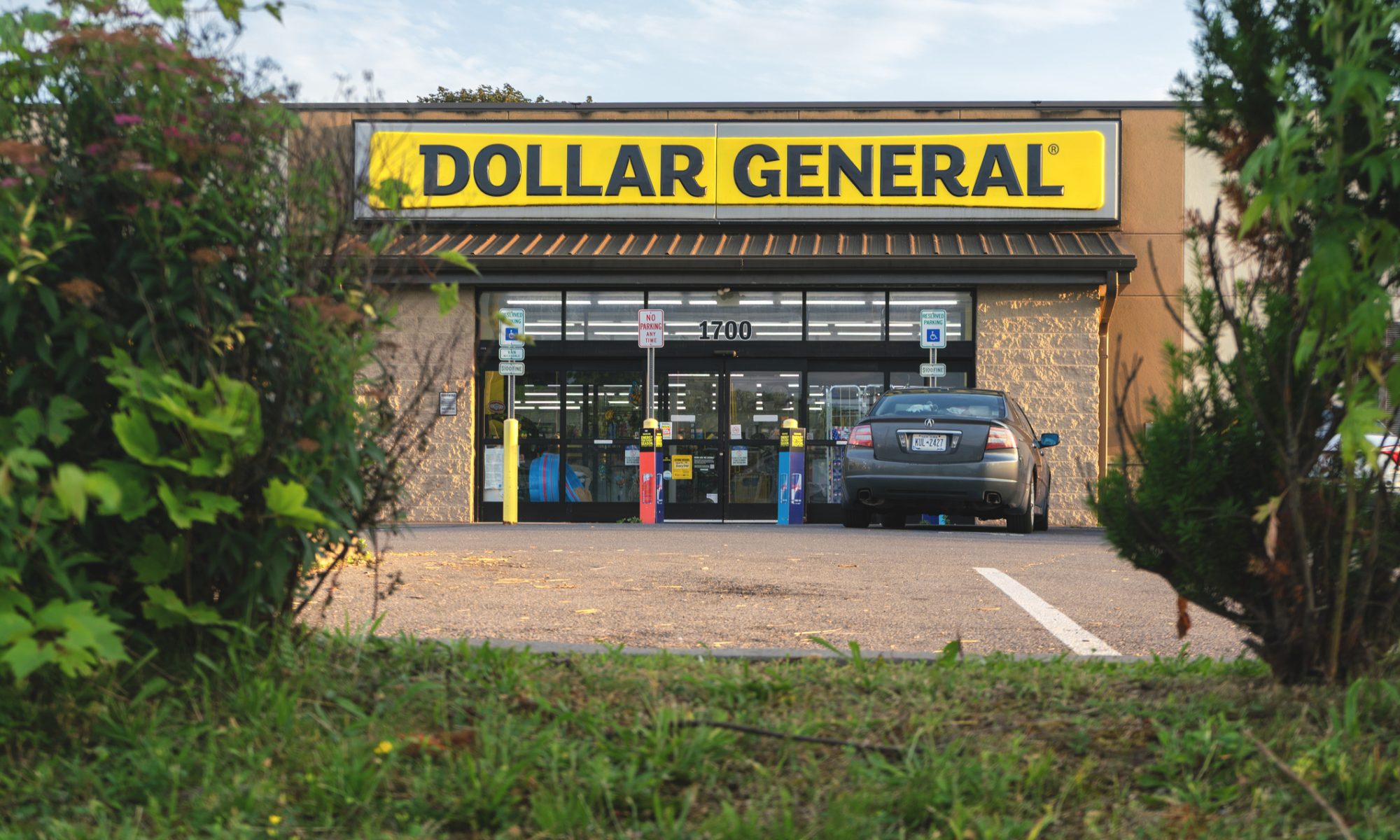
Both discounters beat Wall Street this morning, yet investors split them apart within minutes of the open. Dollar General(DG) climbed 7.7% in premarket trading to $132.25 after it raised every line of its fiscal 2026 outlook, while Dollar Tree(DLTR) dropped 6.45% to $123.65 despite clearing consensus by more than a dollar per share. That 14-point spread between two companies serving nearly the same customer tells you exactly what the market is paying for right now — and it is not the quarter that just ended.
Key Points
- DG delivered $2.48 in diluted EPS against a $2.01 consensus, on net sales of $11.29 billion (+5.2% year over year), topping the $11.18 billion estimate.
- Traffic drove the beat, not price. Dollar General’s same-store sales rose 3.5%, split between a 2.0% gain in customer traffic and a 1.5% rise in average transaction — its fifth consecutive quarter of traffic growth.
- Management raised guidance across the board: FY26 EPS moved to $7.80–$8.00 from $7.20–$7.45, net sales growth to 4.0%–4.3% from 3.7%–4.2%, and same-store sales to 2.5%–2.9% from 2.2%–2.7%.
- DLTR posted a far larger headline beat — $2.70 adjusted EPS versus $1.11 expected, on $4.9 billion in revenue (+7.0%) and a 3.7% comp.
- However, tariff refunds supplied $1.31 of that $2.70 — roughly half the adjusted number.
- Dollar Tree’s third-quarter guide broke the story. Management called for $0.80–$0.95 in adjusted EPS against a $1.39 consensus, a midpoint roughly 37% below the Street.
- Margins moved in Dollar General’s favor: gross margin expanded 127 basis points to 32.6% and operating margin widened to 6.8% from 5.6%.
Dollar General Earned Its Move
Todd Vasos returned to the reporting podium with a quarter that held up under inspection. “We are pleased with our second quarter performance, which included balanced topline growth, healthy operating margin expansion and strong double-digit EPS growth,” the chief executive said.
That word — balanced — matters. Dollar General grew transactions faster than ticket, which means real shoppers walked through more doors rather than simply absorbing higher shelf prices. Moreover, the company has now strung together five straight quarters of traffic gains, a streak that argues for share capture rather than a one-quarter bounce.
Operating leverage followed. Gross margin expanded 127 basis points to 32.6%, though roughly 81 of those points came from tariff refunds — a detail worth flagging, since the underlying expansion narrows to about 46 basis points once you strip the refund out. Even so, operating margin jumped a full 120 basis points to 6.8%, and the company grew its footprint to 21,148 stores from 20,746 a year ago.
Management then backed the quarter with capital commitments. The board declared a $0.59 quarterly dividend and reaffirmed roughly 4,730 real estate projects for fiscal 2026, including 450 new U.S. stores, against capital expenditures of $1.4 billion to $1.5 billion. Companies rarely accelerate store openings into a weakening consumer.
One caution belongs in the file: free cash flow margin fell to 3.3% from 5.3% a year ago. Inventory and capex explain most of that gap, but the line deserves attention next quarter.
Dollar Tree Beat the Quarter and Lost the Story
Dollar Tree’s print looked spectacular on the surface. Adjusted EPS of $2.70 more than doubled the $1.11 consensus, revenue of $4.9 billion topped estimates, and comparable sales rose 3.7%. Chief Executive Mike Creedon pointed to the top line directly: “Positive traffic trends helped drive strong comparable sales growth and EPS exceeded the high end of our outlook.”
Investors, however, read the composition rather than the total. Net tariff refunds contributed $1.31 per share to the quarter — nearly half of adjusted EPS — which reframes a blowout as a windfall. In addition, the comp leaned on a 3.3% increase in average ticket against just 0.4% traffic growth. Where Dollar General won customers, Dollar Tree largely won dollars from the customers it already had.
Then came the guide. Management projected third-quarter adjusted EPS of $0.80 to $0.95 against a $1.39 consensus, a shortfall the full-year framework could not offset. Dollar Tree still lifted FY26 adjusted EPS to $7.70–$8.05 on $20.5–$20.7 billion in net sales and 3%–4% comps, but that range carries roughly $0.60 of tariff-refund benefit inside it. Consequently, the market discounted the raise and priced the near-term shortfall instead.
What the Divergence Signals
Strip both reports down and the same macro backdrop appears: the low-end consumer is still shopping, and tariff refunds are flattering discount-retail P&Ls this cycle. What separates the two tapes is the quality of the beat.
Dollar General presented traffic-led growth, margin expansion, a raised outlook, and expanding capex. Dollar Tree presented a refund-inflated quarter, ticket-led comps, and a third quarter it told the Street to lower. In a market this focused on earnings durability, investors rewarded the first and penalized the second — within the same hour, in the same sector, on the same consumer.
For investors tracking retail as a read on household health, the takeaway runs one level deeper. The discount shopper has not disappeared. Instead, that shopper is consolidating, and the operator winning the visit is now measurably separating from the operator winning the receipt.