The Navy Needs Hulls Faster. HII Just Told Congress How Fast It Can Go.
Iran’s Revolutionary Guard Corps launched ballistic missiles toward a U.S. aircraft carrier and destroyer this week, according to Central Command. Neither ship was hit. That is the backdrop against which HII (NYSE: HII) went before a House Appropriations Subcommittee on Defense field hearing on September 4 and made a case that has stopped being theoretical: the United States needs to build ships faster than it currently does.
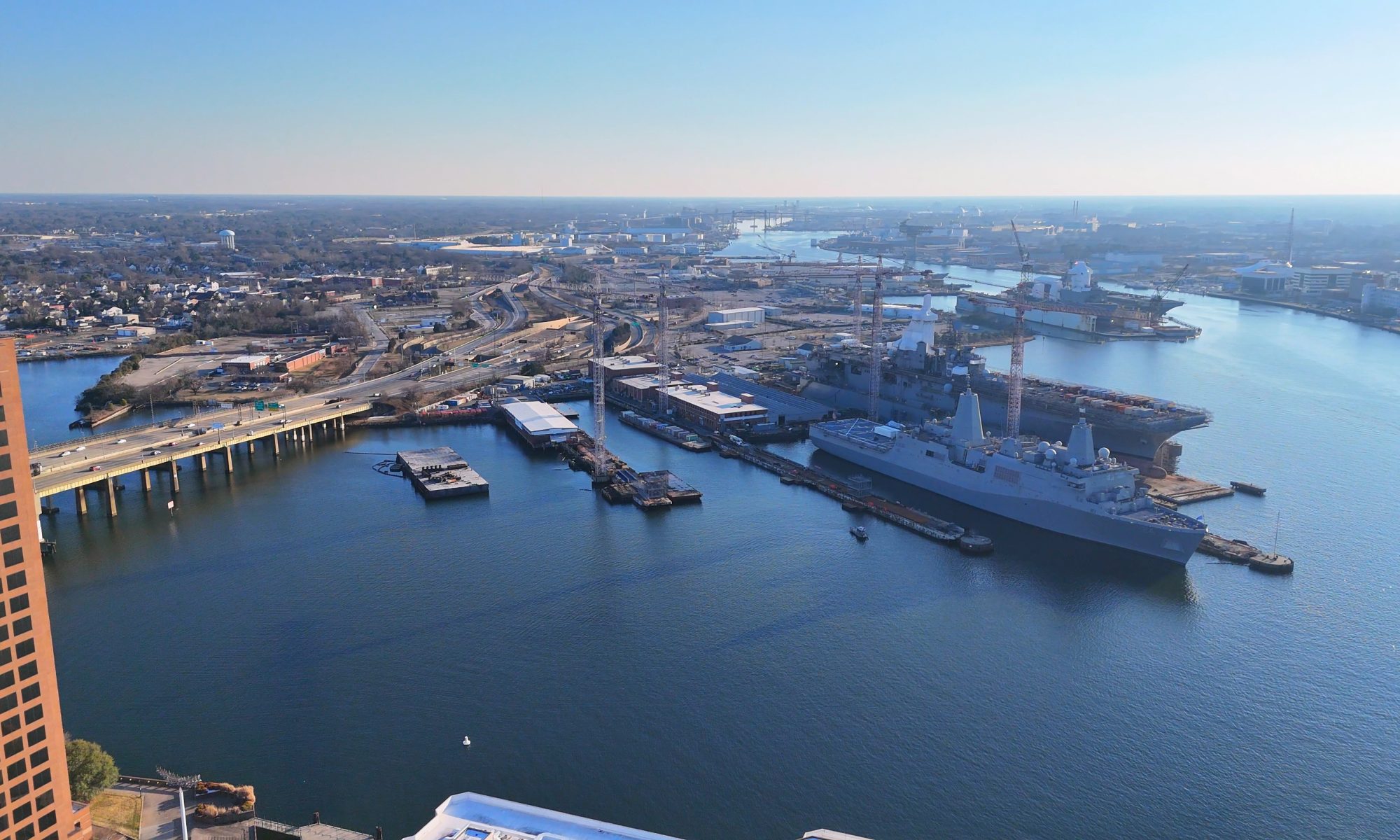
Eric Chewning, HII’s executive vice president of maritime systems and corporate strategy, told the subcommittee that throughput across the company’s shipyards rose 14% year over year in 2025, and that HII is targeting a 15% increase in 2026. Roughly 40 ships are in active construction or modernization across Ingalls Shipbuilding in Pascagoula and Newport News Shipbuilding in Virginia. Chewning did not reference the Strait of Hormuz or the conflict in his testimony. He did not have to. Six months of sustained naval operations have turned fleet availability from a budgeting question into an operational one.
Three Levers Behind the Number
Chewning framed the strategy around workforce, infrastructure, and supply chain. He credited congressional and Navy support for enabling new shipyard collective bargaining agreements with competitive wage increases, a direct response to the skilled trades shortage that has constrained naval production across the sector. On infrastructure, he pointed to capital investment including the use of physical AI in shipbuilding. On the industrial base, HII plans to strategically outsource more than two million hours of work in 2026, a 178% increase from 2024. That outsourcing does double duty. It relieves pressure inside HII’s own yards and gives small and medium-sized suppliers enough visibility to invest in their own capacity.
Charleston as the Template
Chewning highlighted Newport News Shipbuilding’s Charleston Operations as a working model. HII converted an underutilized facility into an advanced manufacturing campus supporting the submarine industrial base, working with the Navy, the State of South Carolina, and the Department of Defense’s Industrial Base Policy Office. The submarine supply chain has been the tightest constraint in the Navy’s build plan, and Charleston is the kind of capacity addition that shows up in delivery schedules years later rather than in a quarterly print.
The Scale Behind the Testimony
HII is the largest shipbuilder in the United States, with 45,000 employees, more than 800 ships delivered across a history of more than 140 years, and over 70 active programs. Fiscal 2025 revenue was $12.5 billion. The company is also the largest producer of unmanned underwater vehicles for the Navy and the world. In July, HII received contracts for construction of Block VI Virginia-class and Build II Columbia-class submarines.
Order books have not been the binding limitation on U.S. naval production. Capacity has. Throughput is the metric that determines whether appropriated funding turns into delivered hulls, and a second consecutive year of double-digit gains would be the clearest evidence yet that the constraint is loosening.