Victory Marine’s Beverage Arm Assembles a Veteran Sales Bench to Chase National Shelf Space
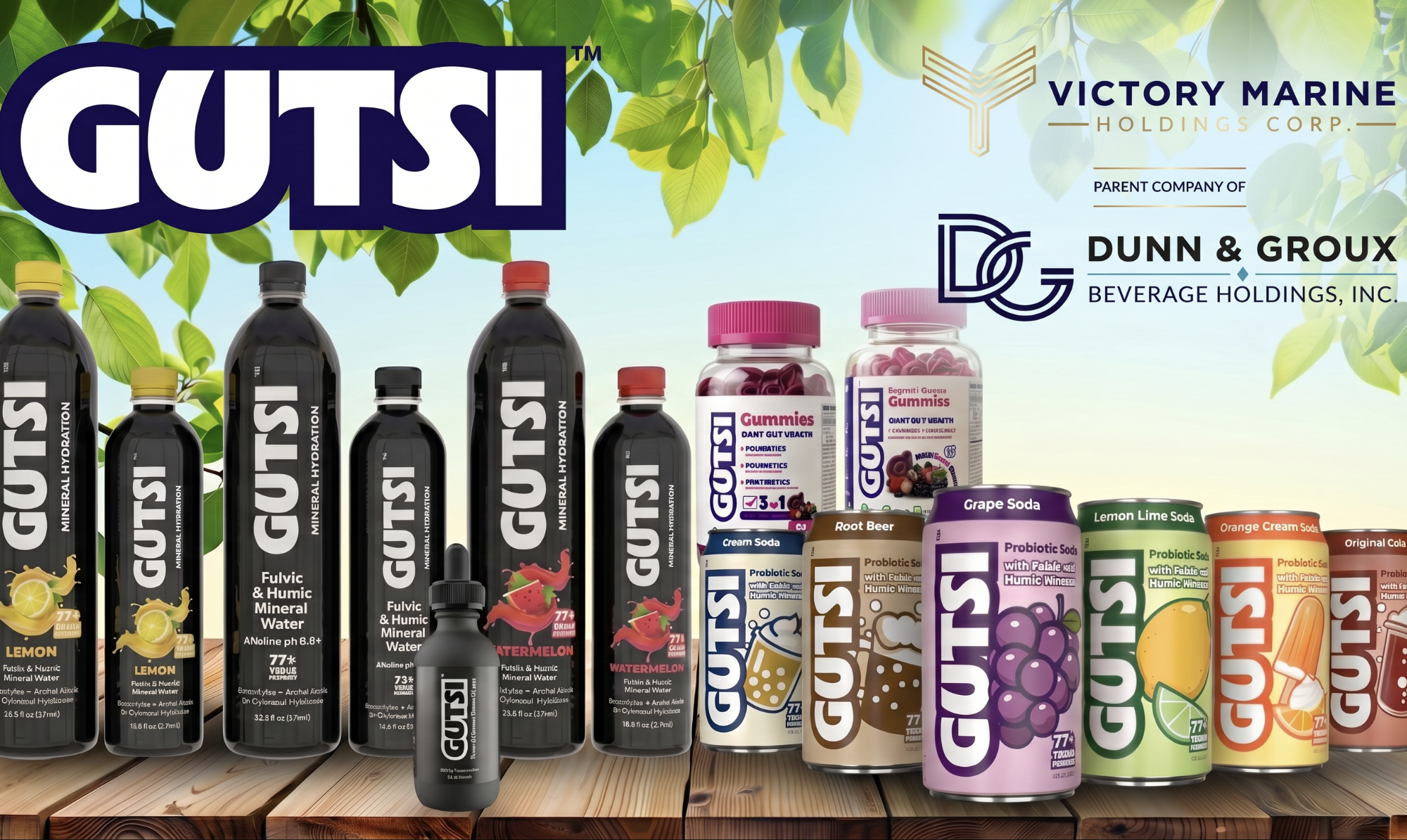
Victory Marine Holdings (VMHG) is building its beverage push around people, not just product. Through its wholly owned subsidiary Dunn & Groux Beverage Holdings (DGBH), the company said today it has completed its national commercial leadership team, the final piece, management describes, of a vertically integrated platform built to push its GUTSI™ wellness portfolio onto shelves across the country.
A Century of Beverage Muscle
Rather than hire a single rainmaker, DGBH assembled a trio. Bob Hofmann steps in as Senior Vice President, National Sales, bringing four-plus decades tied to names like Pepsi-Cola (PEP), Snapple, Big Geyser and VOSS Water. Arend Scott joins as VP of National Sales Distribution and DSD, carrying three decades across Dr Pepper (KDP) and RedCon1. Chris Siegel rounds out the group as VP, National Sales, with roots at BODYARMOR, VOSS Water and Talking Rain. Together the three claim more than 100 years of combined industry experience.
Why the Structure Matters
Notably, DGBH isn’t leaning only on distribution partners. The company owns its Direct Store Distribution footprint, 15,000 square feet in Los Angeles and 5,000 in Tempe, through its Groux Distribution Group subsidiary. That vertical setup lets DGBH move both its own GUTSI™ line, formulated around a patent-backed fulvic and humic mineral complex, and a roster of third-party beverage brands through the same pipes. Owning part of that distribution gives the company more control over execution, and it lets the same network carry both proprietary and partner brands.
A New License Layer
Consequently, the growth story now extends beyond soft drinks. The Los Angeles DSD operation recently secured beer, wine, spirits and importer licensing and expects to begin alcohol distribution in the third quarter of 2026, while the Arizona facility has applications pending. That optionality broadens what the company can carry per delivery route, raising the potential utilization of infrastructure already in place.
From Platform to Execution
For a micro-cap on the OTC market, the announcement is less about a single product and more about infrastructure: brands, company-owned distribution, licensing and now an experienced commercial team, stacked into one operating model. The company’s own forward-looking-statements disclaimer flags the usual risks around retailer acceptance, distributor performance and regulatory timing. With the commercial team, owned distribution, and licensing now in place, the next phase turns on whether the company can convert that infrastructure into broader retail placement, deeper market penetration, and stronger shelf velocity.