Planet Labs Turns Pelican Satellites Into Orbiting AI Data Centers
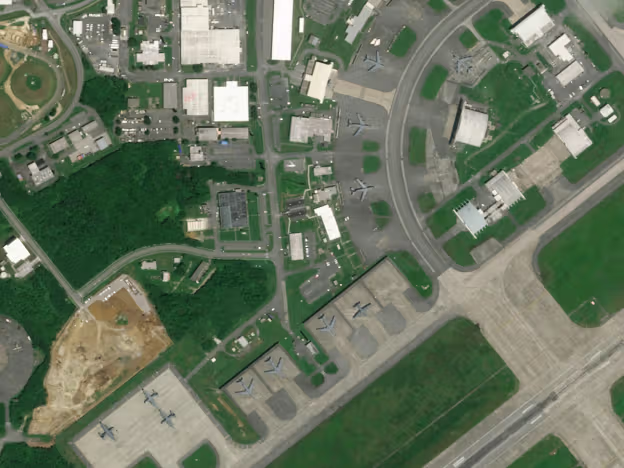
Planet Labs PBC (NYSE: PL) announced it has successfully deployed and run AI‑driven object detection directly onboard its Pelican‑4 Earth‑observation satellite using an NVIDIA Jetson edge module. In its first on‑orbit test over Alice Springs, Australia, the model achieved about 80% detection accuracy on raw imagery, with work underway to further refine precision and recall.
“Planetary Intelligence”: analysis in space, not on the ground
Instead of downlinking imagery first and running AI in the cloud, Pelican‑4 performs the full workflow in orbit—image capture, deep‑net object detection, geo‑rectification, and packaging outputs as GeoTIFF and GeoJSON inside isolated Docker containers. Planet calls this capability “Planetary Intelligence” and says it can compress the time from collection to answer from hours to minutes, enabling customers to act faster in disaster response, security, and other time‑critical use cases.
Building a near real‑time intelligence network with NVIDIA
The on‑orbit demo is part of a broader strategic initiative with NVIDIA (NASDAQ: NVDA) to build a GPU‑native AI engine that spans Planet’s data centers and satellite constellations. New Pelican satellites and the forthcoming Owl constellation will carry NVIDIA Jetson (and tested IGX/Thor modules), with high‑speed inter‑satellite links designed to create a near real‑time geospatial intelligence network rather than a traditional “collect‑and‑downlink” imaging fleet.
Investor angle for PL
For PL shareholders, running AI at the orbital edge is a key differentiator that can turn Planet from a raw imagery vendor into a higher‑margin provider of alerts and analytics. The upside case is that defense, climate, insurance, and commercial customers will pay more for minutes‑level answers and taskable AI workflows; the risks involve technical execution across the Pelican/Owl rollouts, competitive pressure from other space‑AI players, and the capital intensity of scaling a “space data center” architecture.