HII Wins Pentagon Contract to Autonomously Deploy and Recover Underwater Drones from Submarines
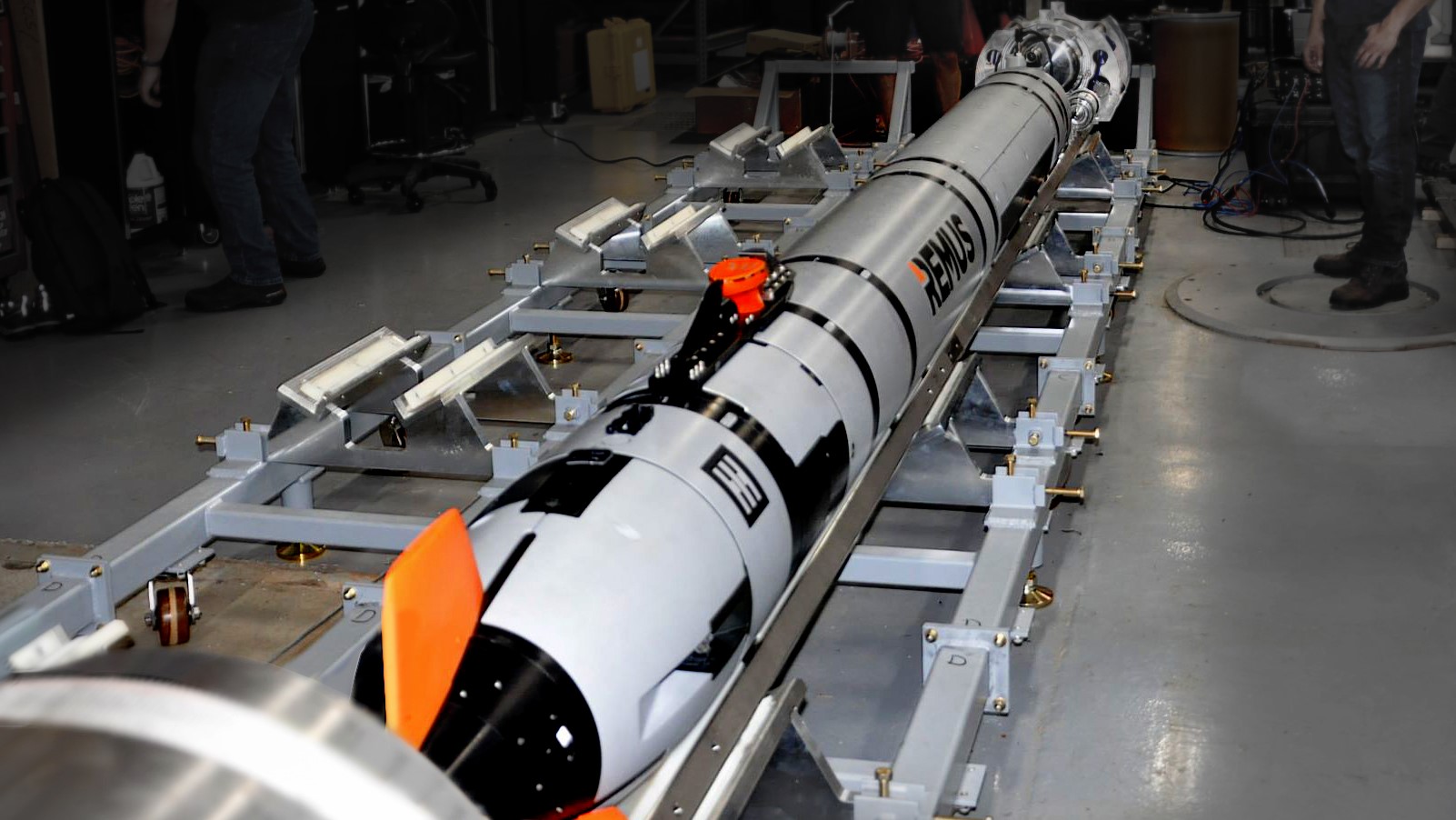
HII (NYSE: HII) is taking a major step forward in autonomous undersea warfare after the Defense Innovation Unit (DIU) awarded the company a contract to deliver a submarine Torpedo Tube Launch and Recovery (TTLR) system. The system will enable U.S. Navy submarines to autonomously deploy and recover HII’s REMUS unmanned underwater vehicles (UUVs) — without diver assistance.
The award builds directly on HII’s 120-year legacy in undersea warfare and its standing as both one of two builders of U.S. nuclear-powered submarines and the world’s largest producer of UUVs. Together, those capabilities give HII a uniquely integrated position in the fast-growing manned and unmanned teaming space.
“There is no company with more expertise in both the crewed and un-crewed sides of teamed operations,” said Duane Fotheringham, president of HII’s Unmanned Systems group. “We look forward to continuing our strong partnership with the U.S. Navy to deliver the innovative solutions our forces urgently need in the subsea domain.”
A Track Record That Backs the Claim
HII’s confidence isn’t unfounded. To date, the company has delivered more than 750 REMUS vehicles to over 30 countries, including 14 NATO members — and more than 90% of those systems remain in active service after two decades. That kind of durability and reliability has made REMUS the go-to UUV platform for allied naval forces worldwide.
More importantly, HII has already demonstrated the technology in the field. In June 2025, the U.S. Navy and Woods Hole Oceanographic Institution (WHOI) conducted the first-ever forward-deployed torpedo tube launch and recovery of an HII-built REMUS 600 from the USS Delaware (SSN 791) — a Virginia-class submarine that HII itself constructed. Operating with an unmanned undersea vehicle squadron (UUVRON-1), the crew completed three fully autonomous launch and recovery sorties through the submarine’s torpedo tube, all without diver support.
That milestone marked a genuine leap forward in autonomous ISR and broader maritime mission capability.
Building on Momentum
Just one month later, in July 2025, HII pushed the technology even further. A joint team from HII, WHOI, and the Naval Undersea Warfare Center Division Newport completed the first-ever recovery of the next-generation REMUS 620 into a Virginia-class torpedo tube and shutterway test fixture at Seneca Lake, New York.
During that in-water testing, the REMUS 620 proved out advanced autonomous navigation and communication systems. The vehicle successfully docked with a shock and fire enclosure capsule (SAFECAP) inside a submerged torpedo tube fixture and executed reverse swim-out launch and safe separation procedures — validating the critical functions the Navy will need for real-world deployment.
Why It Matters
Integrating UUVs through standard submarine interfaces extends mission reach, enhances stealth, and reduces operational risk and crew burden — three priorities the Navy has increasingly emphasized as undersea competition intensifies. With this new DIU contract, HII is now positioned to deliver a fully operational TTLR system that brings those capabilities out of the test environment and into the fleet.
For investors tracking the defense autonomy space, HII’s dual footing in nuclear submarine construction and autonomous unmanned systems makes it one of the few companies capable of owning both sides of this emerging operational model.
For more investor relations information about HII please visit www.ir.hii.com.