Comcast Splits in Two, Spinning Off NBCUniversal and Sky to Sharpen Its Focus
Comcast Draws a Line Between Media and Connectivity
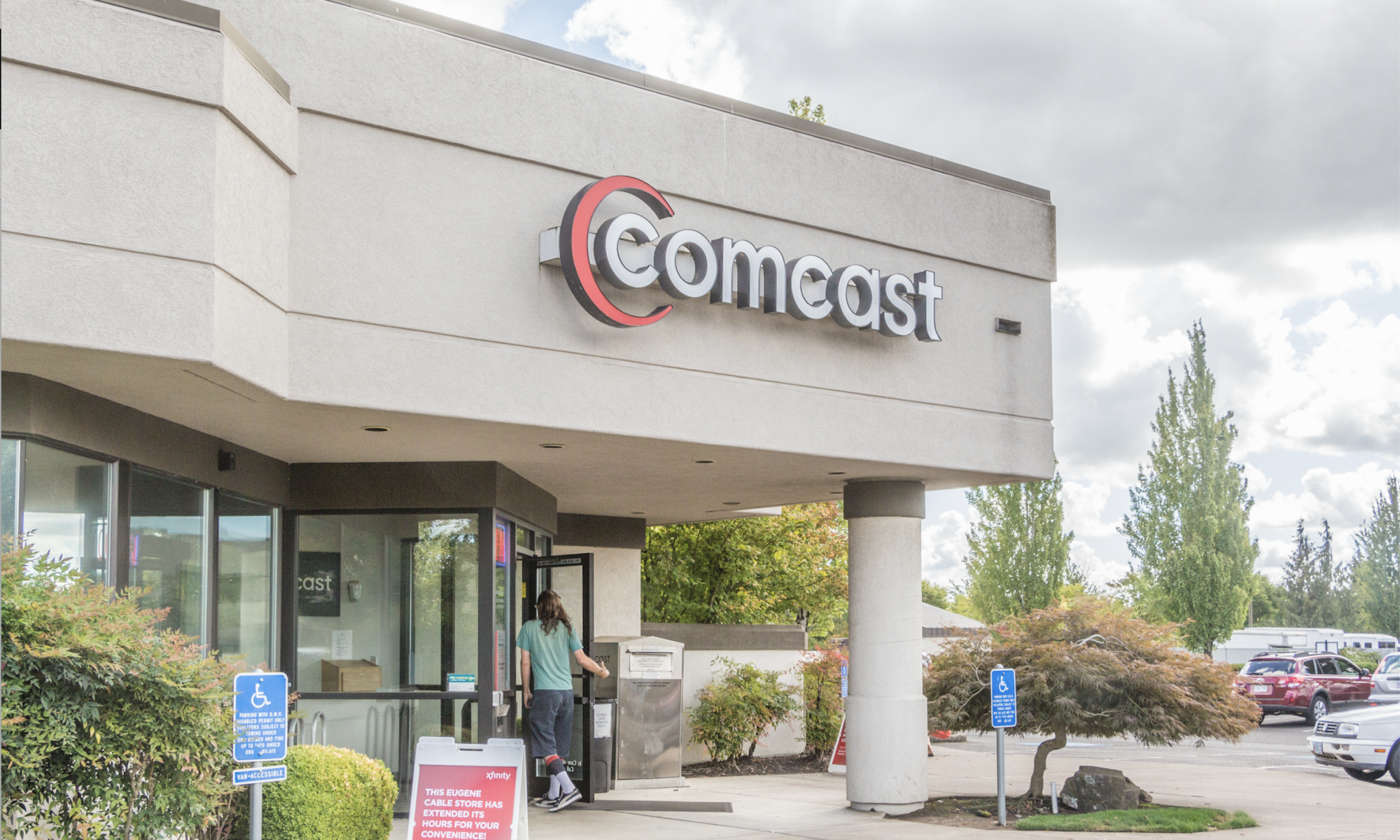
Comcast (CMCSA) confirmed Monday that it will break itself into two publicly traded companies, separating its NBCUniversal and Sky media operations from its broadband and connectivity business. With the move, the cable giant aims to give each unit a sharper strategic focus rather than running them under one sprawling corporate roof.
Investors responded immediately. In fact, Comcast shares jumped roughly 20% in premarket trading as the market digested the news, signaling strong early enthusiasm for the breakup.
How the Breakup Will Work
Mechanically, Comcast structured the deal as a tax-free spinoff and expects to complete it in about a year, pending customary conditions that include board approval. Once it closes, current shareholders will hold stock in both companies rather than choosing between them.
Going forward, the two businesses will pursue very different paths. Comcast will concentrate on broadband, wireless, and business-services operations, while NBCUniversal — paired with Sky — will stand alone as a media and entertainment company. Notably, that media entity will carry a deep portfolio of assets, spanning theme parks, film and television studios, the NBC and Telemundo networks, and streaming brands Peacock and Bravo. Moreover, Comcast plans to retain a stake of up to 19.9% in NBCUniversal for as long as a year after the split.
New Leadership for Two New Companies
Alongside the structural change, Comcast reshuffled its leadership to match. Chairman and co-CEO Brian Roberts will stay actively involved in steering both companies, preserving continuity at the top. Meanwhile, co-CEO Mike Cavanagh will take the helm of NBCUniversal, and former finance chief Michael Angelakis will return to lead Comcast itself.
According to the company, the logic is straightforward: a cleaner structure should unlock a more entrepreneurial approach and free each business to chase its own opportunities. Connectivity and media, in other words, no longer need to compete for attention and capital inside the same organization.
Why This Fits a Bigger Media Shake-Up
Importantly, Comcast isn’t acting in a vacuum. The company already spun off its cable TV networks earlier this year into a separately traded entity, Versant Media (VSNT) — a move PRISM covered as a rare media debut on the Nasdaq. Consequently, this latest separation reads as the next logical step in a broader restructuring rather than a sudden pivot.
The timing also tracks an industry-wide wave of consolidation. For instance, Fox recently agreed to acquire streaming platform Roku (ROKU) in a cash-and-stock deal valuing it near $22 billion. Likewise, Paramount Skydance (PSKY) struck a roughly $110 billion deal to absorb rival Warner Bros. Discovery — an agreement that has since cleared key regulatory hurdles, as PRISM detailed in EU Nears Approval of Paramount’s $111bn Warner Bros Deal, With Conditions.
The Takeaway for Investors
Ultimately, Comcast’s split crystallizes a theme reshaping the entire sector: as streaming pressures squeeze traditional media, scale alone no longer guarantees success — focus does. The breakup also sent ripples beyond Comcast itself, lifting peers on deal speculation, a dynamic PRISM explored in Charter Rides Comcast Shake-Up: CHTR Pops on Media Spinoff Buzz. Therefore, while the transaction won’t close for about a year, it gives investors two cleaner stories to evaluate — a connectivity pure-play and a global media-and-entertainment company — and adds fresh momentum to an already busy season of media dealmaking.
Related PRISM Market View coverage