Powering Intelligence: How AI Demand Rewired the Clean Energy Trade in 2026
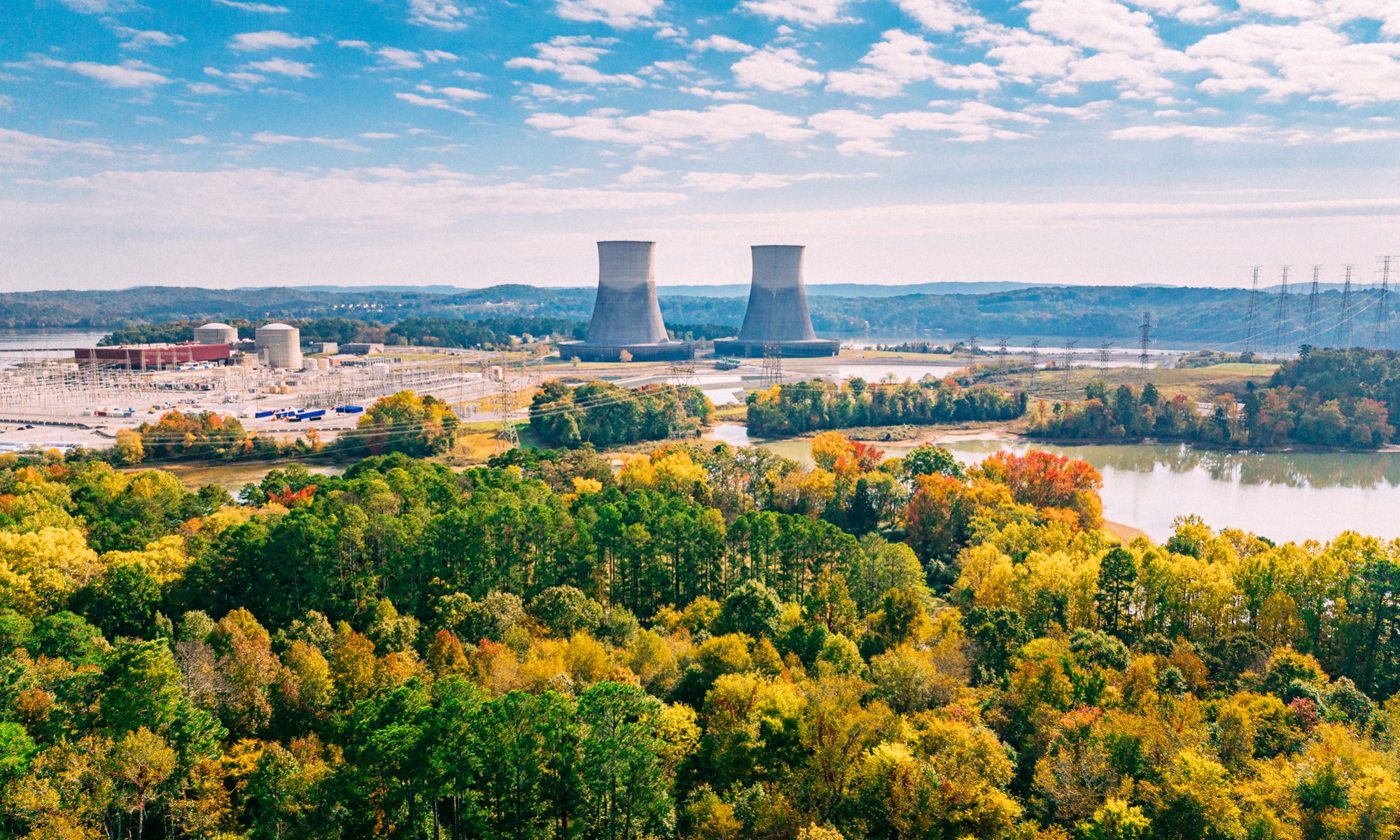
From September 14 through September 18, policymakers, utilities, and trade groups mark National Clean Energy Week, now in its tenth year. Lawmakers from both parties have backed the designation, and governors across several states issued proclamations to match. The framing has remained deliberately nonpartisan, treating clean energy as an economic and national security question.
The agenda signals where federal attention has moved. This year’s symposium features Nuclear Regulatory Commission Chairman Ho Nieh, the Department of Energy’s Assistant Secretary for the Office of Electricity, the Nuclear Energy Institute, and the chief executive of Commonwealth Fusion Systems, alongside governors and members of Congress. Grid capacity and nuclear licensing now sit at the center of the conversation. One PRISM index constituent appears on the speaker list directly, with Fluence Energy represented by its Vice President of Policy and Advocacy.
The demand side has changed beyond recognition. Artificial intelligence turned electricity into a strategic input, and hyperscalers have begun contracting for power years in advance rather than buying it off the grid as needed. That shift shows up clearly in company disclosures, where backlog, order intake, and contracted capacity now tell the story better than quarterly revenue does. The nine companies below sit at different points along that chain, drawn from the PRISM New Energy, AI Datacenter & Infrastructure, EV, and Semiconductors indexes.
Generation and Fuel: Clean Firm Power Moves to the Front of the Queue
Hyperscalers have a problem intermittent renewables cannot solve, namely where to find clean power that runs continuously. Two answers emerged, and both were contracted at scale. Google signed a framework agreement with Fervo Energy covering up to 3 gigawatts of geothermal capacity through 2033, while Meta announced agreements for up to 6.6 gigawatts of new and existing clean energy by 2035 across Vistra, TerraPower, and Oklo. Consequently the binding constraint has moved away from procurement interest and toward construction timelines and fuel supply.
- Fervo Energy (NASDAQ: FRVO): A technology-enabled independent power producer developing enhanced geothermal systems, and the first next-generation geothermal company to trade publicly. Its first quarter 2026 results detailed a $2.2 billion initial public offering, which management described as the largest primary energy and power IPO in recent memory, raising capital to accelerate a multi-gigawatt pipeline and near-term execution at Cape Station in Utah, the world’s largest enhanced geothermal project and one targeted for first power in the fourth quarter of 2026. The company reported 658 megawatts of contracted power purchase agreements, a Geothermal Framework Agreement with Google establishing a development framework for up to 3 gigawatts through 2033, and a Cottonwood observation well reaching 555 degrees Fahrenheit at 11,200 feet, the hottest in company history. It also agreed with Liberty Mutual to monetize tax credits from Cape Station Phase I. Those commitments come against real construction spending, with a first quarter operating loss of $20.1 million, a net loss of $31.8 million, and capital expenditures of $172.8 million compared with $105.4 million a year earlier, as detailed in the earnings release filed with the Securities and Exchange Commission. By the second quarter, Fervo had raised its long-term development target to 1.1 gigawatts by 2030, a 100 megawatt increase, and advanced Cape Station Phase I to mechanical completion on its first two GeoBlocks with commissioning underway. Management also noted growing buyer interest in behind the meter arrangements that sidestep conventional grid interconnection timelines.
- Oklo (NYSE: OKLO): Develops fast fission power plants and is advancing nuclear fuel recycling and critical isotope production. Its share of that Meta commitment supports up to 1.2 gigawatts of nuclear development in Pike County, Ohio, under which Meta prepays for power and funds project certainty, with a first phase targeted for 2030 and the full 1.2 gigawatts by 2034. On fuel, Oklo signed a letter of intent with Centrus covering enough domestic high-assay low-enriched uranium for up to five Aurora powerhouses, with deliveries beginning in 2029 from the American Centrifuge Plant. Investors should note that this remains a letter of intent rather than a definitive supply agreement. Execution has moved faster on the reactor side. Oklo broke ground on its first Aurora powerhouse at Idaho National Laboratory in September 2025, received Department of Energy startup authorization for its Groves reactor in July 2026, and announced that Groves achieved first criticality in under a year, making it the first reactor under the DOE Reactor Pilot Program to reach that milestone on private land, built from the ground up on a greenfield site. In its second quarter 2026 results, the company reported revenue of $1.2 million, a year to date net loss of $81.6 million, and approximately $3.0 billion in cash and marketable securities, of which approximately $1.85 billion in net proceeds was raised through at the market programs during 2026. A further equity distribution agreement of up to $1.0 billion was filed in September 2026, replacing a prior program. Dilution is therefore an active consideration alongside the operational progress.
- Energy Fuels (NYSE American: UUUU): A United States producer of uranium, rare earth elements, and other critical minerals, and the index name most directly exposed to the fuel constraint described above. In its second quarter 2026 results released August 5, 2026, the company reported revenue of $25.1 million against $4.2 million a year earlier, on sales of 310,000 pounds of uranium oxide concentrate. Production reached approximately 865,000 pounds in the quarter and 1.7 million pounds in the first half, meeting full year production guidance by mid-year. The balance sheet is the standout figure, with $996.0 million of working capital at June 30, including $58.4 million of cash and $878.3 million of marketable securities. The company posted a net loss of $33.6 million, driven primarily by transaction costs tied to its planned acquisitions of Vacuumschmelze and Australian Strategic Materials, so investors are funding a diversification into rare earths alongside the uranium business.
- FuelCell Energy (NASDAQ: FCEL): Manufactures fuel cell platforms delivering continuous baseload power for mission critical applications. In June 2026 the company announced a strategic agreement with Fit Energy for up to 380 megawatts of clean power for data centers, structured across four phases, of which only the 30 megawatt Phase 0 is committed with deliveries beginning in the fourth quarter of fiscal 2026, while the remaining phases sit at Fit Energy’s option. Its third quarter fiscal 2026 results reported total committed and awarded capacity backlog of $3.6 billion as of July 31, against $1.25 billion a year earlier, and disclosed a first capacity reservation agreement with a major data center operator for a planned 75 megawatt project in Texas, comprising six 12.5 megawatt Block systems with an upfront reservation payment. Current results remain well behind the backlog, with revenue down 29% year over year to $33.0 million and a net loss of $45.3 million. Management targets a 100 megawatt annualized production rate in October 2026 and positive adjusted EBITDA in the fourth quarter of fiscal 2027.
Storage, Infrastructure, and Silicon: Turning Power Into Compute
Generation means little without the physical layer that stores, integrates, and converts it. Storage capacity, rack integration, and packaging equipment now sit directly in the path of every announced gigawatt.
- Fluence Energy (NASDAQ: FLNC): Delivers grid-scale energy storage, operational services, and asset optimization software, and is the one company in these indexes appearing on this year’s National Clean Energy Week speaker list. Its third fiscal quarter 2026 results released August 5, 2026 captured both sides of the storage trade. Backlog reached approximately $6.4 billion as of June 30, the highest level in company history, while total liquidity stood at approximately $863.0 million including roughly $365.0 million of cash. Execution is the problem. Revenue of approximately $649.8 million compared with $602.5 million a year earlier but fell short of expectations because of production delays at new contract manufacturing facilities, and GAAP gross margin declined to approximately 5.1% from 14.8%. Backlog answers whether demand exists, and this quarter tested whether the company can convert it.
- TSS, Inc. (NASDAQ: TSSI): Provides integration and related services for AI and other high performance computing infrastructure, with AI rack integration as the growth engine. In its second quarter 2026 results reported August 13, 2026, total revenue was $35.1 million, down 20% year over year, reflecting a deliberate shift away from lower margin procurement work toward higher margin systems integration and facilities management. Systems integration revenue grew 46% year over year, net income was $1.4 million, and diluted earnings per share were $0.05. The company also began deploying capital toward a planned $17 million investment in readiness for next generation AI data center technology, which it expects to convert into higher systems integration revenue.
- Amtech Systems (NASDAQ: ASYS): Manufactures equipment and consumables for AI semiconductor device packaging and advanced substrate fabrication, including thermal processing used in silicon carbide and silicon power devices. In its fiscal third quarter ended June 30, 2026, revenue reached $22.4 million at the high end of guidance, up 14.5% year over year, while AI related revenue climbed approximately 120%. The Thermal Processing Solutions segment generated roughly $17.7 million, up 24.9%, with a book to bill ratio of 1.37. Earlier in the year, AI infrastructure accounted for 35% of that segment’s revenue, up from 30% in the prior quarter. Cash stood at $83.1 million at June 30, 2026, up from $24.4 million at March 31, 2026, following $56.5 million of net proceeds from a June stock offering. The offset is the mature node Semiconductor Fabrication Solutions segment, where softer demand, particularly for silicon carbide products, has weighed on results.
Electrification: The Demand Side Finds Operating Leverage
Charging networks spent years absorbing losses to build footprint. In 2026, the unit economics began to turn.
- ChargePoint (NYSE: CHPT): Operates one of the largest electric vehicle charging networks across North America and Europe. In its second quarter fiscal 2027 results for the quarter ended July 31, 2026, revenue reached $116.1 million, up 18% year over year, while the GAAP net loss was $35.6 million and the non-GAAP adjusted EBITDA loss narrowed to $4.8 million. Readers comparing coverage should note the distinction between adjusted EBITDA loss and adjusted net loss, which are different figures in the same release.
- EVgo (NASDAQ: EVGO): Operates a public fast charging network powered by renewable electricity. In its second quarter 2026 results released August 5, 2026, charging network revenue reached $61.4 million, up 19% year over year, while total revenue was $82.6 million and adjusted EBITDA was negative $10.6 million. The segment detail therefore matters more than the consolidated line. Separately, the company announced an expansion of fast charging through United States Supercharger deployment, covering Tesla V4 Superchargers rated up to 500 kilowatts with Magic Dock connectors, with deployments starting in fall 2026.
Synthesis: What Separates a Pipeline From a Business
Across all four indexes the same distinction keeps surfacing. Announced demand is abundant, and contracted demand is scarce. Letters of intent, optional contract phases, and reservation agreements all signal interest without guaranteeing revenue, and each of the companies above carries at least one commitment of that kind.
Therefore the metrics that matter are conversion metrics. Watch committed backlog rather than total pipeline, phases that are contracted rather than optional, definitive agreements rather than letters of intent, and segment level margin rather than consolidated revenue. Fluence illustrates the point most clearly, having set a record backlog in the same quarter it missed revenue on factory delays. Demand is no longer the question. Execution is.
National Clean Energy Week closes on September 18. The more durable takeaway is that clean energy now serves a customer base that plans in gigawatts and contracts years in advance. FRVO, OKLO, UUUU, FCEL, FLNC, TSSI, ASYS, CHPT, and EVGO each occupy a different link in that chain, and each carries a distinct execution risk.
This article is for informational purposes only and does not constitute investment advice, a recommendation, or an offer to buy or sell any security. PRISM MarketView is not a registered investment advisor. Companies mentioned are constituents of PRISM indexes; inclusion in an index does not imply endorsement. The clinical-stage and commercial-stage companies discussed carry significant regulatory, clinical, and financial risk, including the possibility of delay, non-approval, or commercial failure. Information is sourced from public filings and reports believed to be reliable but is not guaranteed to be accurate or complete. Readers should conduct their own research and consult a qualified financial advisor before making investment decisions. Past performance is not indicative of future results.