AST SpaceMobile Unveils Its Own Rocket and Targets Year-End Service as Q3 Revenue Nearly Triples
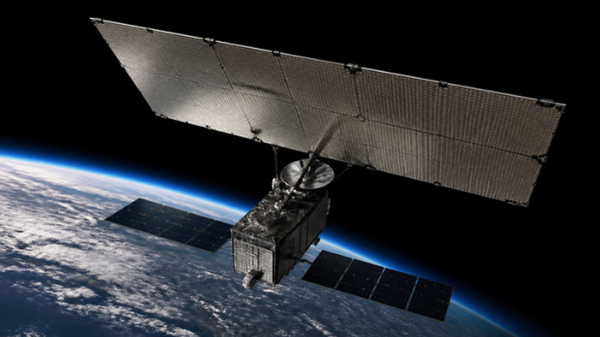
AST SpaceMobile (NASDAQ: ASTS) reported third-quarter revenue of $42.3 million on Monday, up from $14.7 million a year earlier. Even so, the bigger news came from its business update. The PRISM Space Index company now expects intermittent nationwide cellular service in the U.S. and other key markets before the end of 2026. It also introduced Blacklift, a 20-ton reusable rocket built to launch its own BlueBird satellites starting in late 2028.
Key Points
- Q3 revenue rose to $42.3 million from $14.7 million, bringing nine-month revenue to $88.6 million. However, revenue came in below the $45.7 million analysts expected.
- The net loss attributable to common stockholders was $132.4 million, or $0.44 per share, compared with $122.9 million, or $0.45 per share, a year earlier.
- AST ended the quarter with about $3.2 billion in cash, cash equivalents and restricted cash. Long-term debt reached $4.08 billion.
- The company kept its 2026 revenue target of $150 million to $200 million and expects to build six satellites a month starting in December.
- Shares jumped 14.1% to close at $36.89 on Monday ahead of the report, then slipped to $36.62 in after-hours trading.
AST SpaceMobile Shares Rebound From a Steep Slide
The results arrived after a rough stretch for the stock. ASTS rallied 14.1% on Monday to close at $36.89, just three sessions after hitting a 52-week low of $27.58 on November 6. Even after that bounce, however, shares still trade about 72% below their May 28 high of $133.86. As a result, investors are looking for proof that AST can turn its satellite pipeline into paying service.
AST SpaceMobile Moves Toward Commercial Service
AST will roll out its first coverage to strategic partners in the U.S., Canada, Japan, Saudi Arabia and the U.K. In addition, the company says it expects to work with every major mobile network operator in the U.S. and Europe. Its potential ecosystem includes more than 60 operators with over 3 billion subscribers. Earlier this month, AST and AT&T also demonstrated the first handoffs between ground-based and space-based cellular networks. Meanwhile, Brazil authorized commercial service using 50 MHz of combined spectrum.
Blacklift Brings Launch In-House
Blacklift will use Miranda and Vira engines and carry up to five BlueBirds per launch. The engines come from the more than $1.3 billion engine and licensing deal with Firefly Aerospace, which PMV covered last week. Until Blacklift starts flying, AST will rely on SpaceX, Blue Origin and U.S. government launch access. It also secured a U.S. priority DPAS rating for its dual-use government and commercial satellite program. Altogether, AST plans to put more than 100 BlueBirds into orbit across 2027 and 2028.
A Packed Launch Pipeline
BlueBirds 14, 15 and 16 are already at Cape Canaveral, waiting for a SpaceX launch date. Next, BlueBirds 17 through 19 ship by the end of November for an early Q1 2027 Blue Origin launch, and BlueBirds 20 through 25 follow in December and January for DPAS-rated launches. AST is targeting about 45 satellites in orbit by mid-2027. The company also moved its next-generation ASIC chip up to BlueBird 34. That chip delivers about 10 times the processing bandwidth of its first-generation Block 1 satellites.
“We expect to achieve a production rate of six ASIC satellites per month in December of this year,” said Chairman and CEO Abel Avellan.
Government Funding Eases the Build
Government money is covering a larger share of the cost. AST expects about $1.0 billion in non-dilutive funding through Japan’s J-LEO program with partner Rakuten. It also expects about $1.2 billion in non-dilutive U.S. quasi-governmental financing in 2027. In addition, a U.S. Space Force space-based sensing contract should bring in about $100 million in revenue, and AST now holds 16 U.S. government awards.
Spending and Debt Rise With the Buildout
The buildout comes at a high cost. Operating expenses more than doubled to $211.0 million from $94.4 million, including $77.4 million in depreciation, amortization and stock-based compensation. Capital spending reached $1.15 billion over nine months, compared with $669.0 million a year earlier. As a result, long-term debt nearly doubled from $2.21 billion at year-end. To reach its 2026 revenue target, AST needs $61 million to $111 million in fourth-quarter revenue. That makes year-end service activation and the next launches the catalysts PRISM Space Index investors should watch.
For more on AST SpaceMobile, see AST SpaceMobile Shrugs Off an Earnings Miss as Its Satellite Network Keeps Growing.