May Mobility Hits the Gas on $1.4B SPAC Deal, Secures $300M+
Key Points
- Autonomous vehicle company May Mobility plans to go public through a merger with ACP Holdings Acquisition Corp.
- The deal values May Mobility at approximately $1.4 billion and could raise more than $300 million.
- The transaction includes a $120 million private investment in public equity, or PIPE, and up to $217 million from ACP Holdings’ trust account.
- May Mobility said it would become the first publicly listed U.S. company focused entirely on autonomous ride-hailing technology.
- The company plans to use proceeds for research and development, safety-driver removal, lower production costs, and new geographic deployments.
May Mobility has agreed to merge with ACP Holdings Acquisition Corp. (NASDAQ: ACGC), a special purpose acquisition company (SPAC), in a transaction that would take the autonomous ride-hailing technology company public. After the merger closes, May Mobility is expected to trade on the Nasdaq under the ticker symbol ($MAY).
The proposed transaction values May Mobility at approximately $1.4 billion and could provide the company with more than $300 million in funding.
SPAC Merger Could Provide Up to $337 Million in New Funding
The transaction includes a $120 million private investment in public equity, commonly known as a PIPE.
May Mobility could also receive up to $217 million from a trust account maintained by ACP Holdings. However, the final amount may be lower if ACP Holdings shareholders choose to redeem their shares when the merger is completed.
May Mobility said it will use the capital to support research and development, including work aimed at removing safety drivers from its autonomous vehicles. The company also plans supply-chain investments intended to reduce the cost of vehicle components and support additional geographic deployments.
May Mobility Targets Pure-Play Autonomous Ride-Hailing Position
Once the merger is completed, May Mobility said it will be the first publicly traded U.S. company focused entirely on autonomous ride-hailing vehicles.
The company is seeking to distinguish itself from Tesla (TSLA), Rivian (RIVN), Alphabet’s (GOOG) Waymo, trucking-focused Aurora, and Kodiak, which are also involved in autonomous-vehicle technology but have different business models or broader operations.
May Mobility describes its strategy as asset-light and partnership-first. Instead of owning and operating robotaxi fleets, the company plans to sell autonomous vehicles to fleet partners while retaining control over remote supervision and software updates.
In exchange, May Mobility expects to receive either fixed fees or licensing fees based on the number of trips.
Existing U.S. Robotaxi Operations Support May Mobility’s Growth Plan
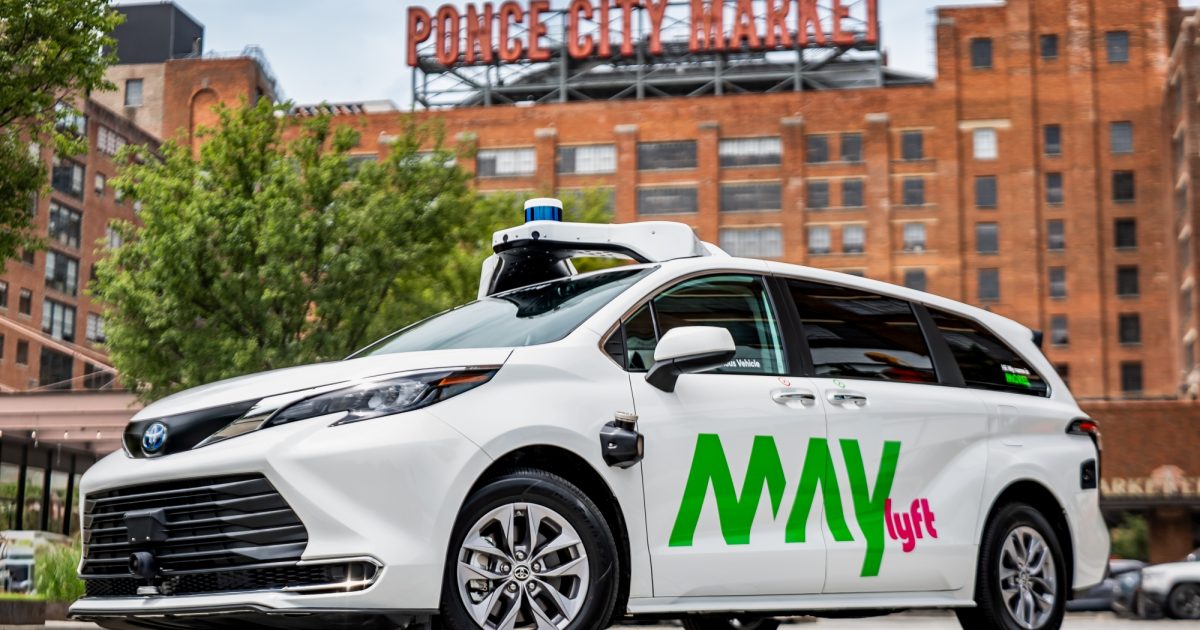
Founded in 2017, May Mobility operates autonomous Toyota Siennas in three U.S. locations.
The company has a partnership with Lyft (LYFT) in Atlanta and operates ride services in Eden Prairie and Grand Rapids, Minnesota.
May Mobility said it has provided more than 550,000 paid autonomous rides and driven more than 1 million miles. The company generated approximately $10 million in revenue last year while reporting cash burn of about $93 million.
Japan Pilot and Uber Launch Plans Expand Autonomous Vehicle Footprint
May Mobility recently began its first trial deployment in Japan.
The company is also planning commercial autonomous ride-hailing launches in Arlington, Texas, with Uber (UBER). Those launches are expected by the end of 2026 or in early 2027.
May Mobility said it expects to announce additional geographic deployments later this year.